
Human Rights Fund
The right to self-determination is a fundamental principle established by the United Nations’ Universal Declaration of Human Rights. It guarantees every individual the ability to freely determine their identity and associations.
Under the Framework Convention on National Minorities, each person has the right to identify themselves with a minority group (or not), and each group has the right to decide whether it would like to preserve its own group identity, including customs, traditions, language, and religion.
While Macedonians have an independent nation-state, the Republic of Macedonia, hundreds of thousands remain in neighboring countries—territories that historically belonged to geographical Macedonia. Today, Albania, Bulgaria, Greece, Kosovo, and Serbia are home to significant Macedonian national minorities with diverse religious affiliations, such as Macedonian Orthodox, Catholic, Jewish, and Muslim, yet who self-identify ethnically as Macedonian. These populations did not migrate but have resided in these areas for centuries. The shifting borders and treaties over time have left them outside the borders of the Republic of Macedonia.
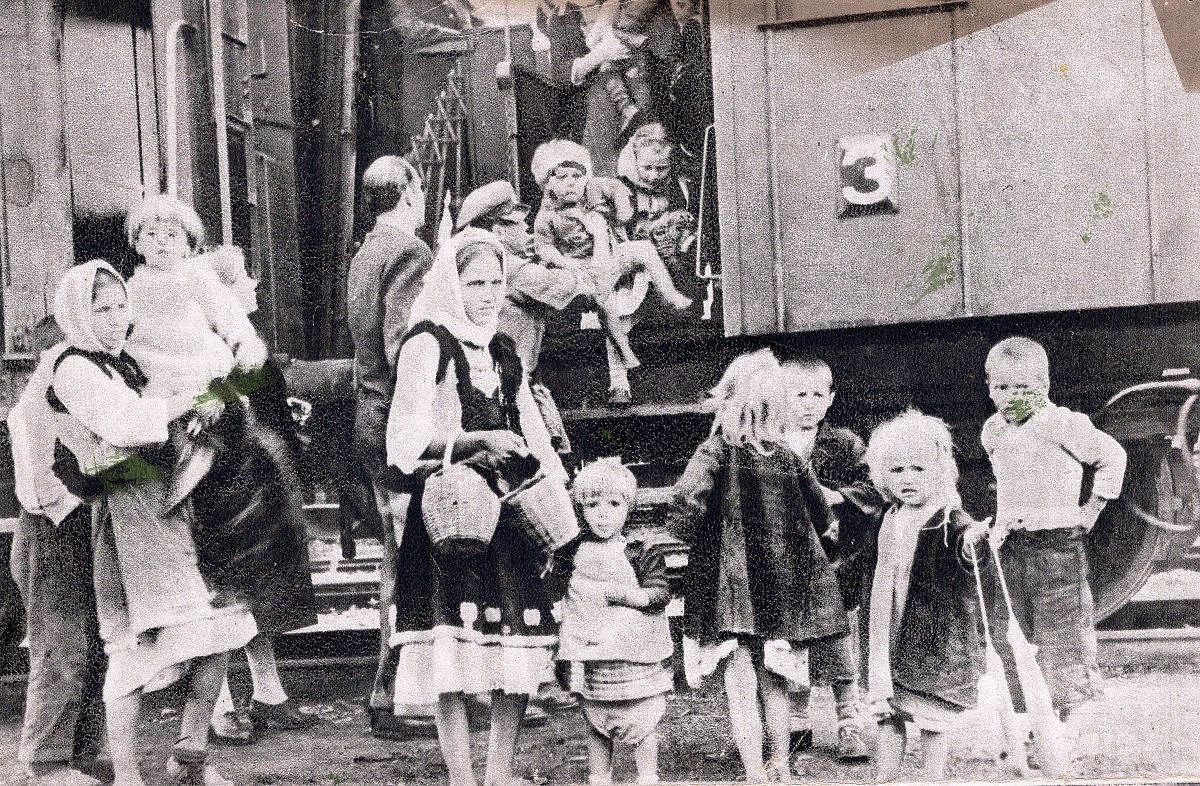
To consolidate control over parts of geographical Macedonia, the governments of Bulgaria, Greece, and Serbia implemented mass ethnic cleansing, assimilation, and discriminatory policies, especially during and after the Balkan Wars. This forced many Macedonians to flee their homes and seek refuge in distant lands, often permanently. During the Greek Civil War (1944-48), 44,000 Macedonian children between the ages of 2 and 14 were taken from their parents and sent to countries such as Czechoslovakia, Hungary, Poland, Romania, Russia, and Yugoslavia. Greek laws enacted in the early 1980s continue to bar these Macedonians from returning to Greece, reclaiming citizenship, and retrieving their confiscated properties—a prohibition that remains enforced today.
MACEDONIAN MINORITY IN GREECE
In Greece, acknowledging Macedonian identity remains a deeply sensitive and often taboo topic. Both the Greek government and the Greek Orthodox Church have historically worked to suppress the expression of Macedonian national identity. As a result, the Macedonian language—which they assert is merely a pseudo-Greek dialect—faces severe restrictions on public use. Efforts to form Macedonian cultural centers or establish a Macedonian Orthodox Church are routinely blocked.
The European Court of Human Rights has repeatedly found Greece in violation of minority rights treaties due to its treatment of the Macedonian minority. Despite these rulings, discrimination against Macedonians in Greece continues, with the community estimated to number over 600,000 individuals.
MACEDONIAN MINORITY IN ALBANIA
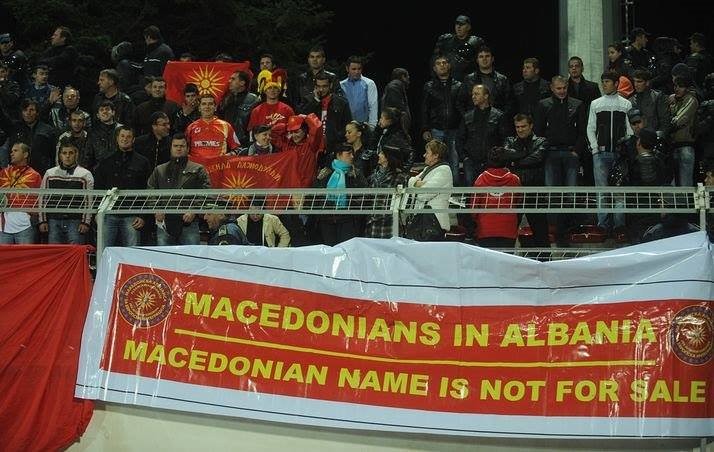
In Albania, the Macedonian minority is officially recognized only in the Prespa region, with a reported population of approximately 5,000 according to the census. These individuals often live in isolated, ‘reservation-style’ villages with limited access to adequate infrastructure, such as proper roads and basic necessities, which forces many to migrate to larger cities within Albania. However, estimates suggest that more than 200,000 Macedonians reside across the country, particularly along the border with the Republic of Macedonia and in the capital, Tirana. Despite this presence, Macedonians outside the Prespa region are not officially acknowledged as part of the Macedonian minority.
The Bulgarian Foreign Ministry, through their Embassy in Tirana and its representatives, has been applying pressure on the Macedonian minority in the Prespa region—a very poor area with minimal economic opportunities for young Macedonians. These efforts, which are regarded as transnational repression, include coercing Macedonians to identify as Bulgarians by offering incentives such as Bulgarian citizenship, granting access to the European Union, and scholarships to study at Bulgarian universities.
MACEDONIAN MINORITY IN BULGARIA
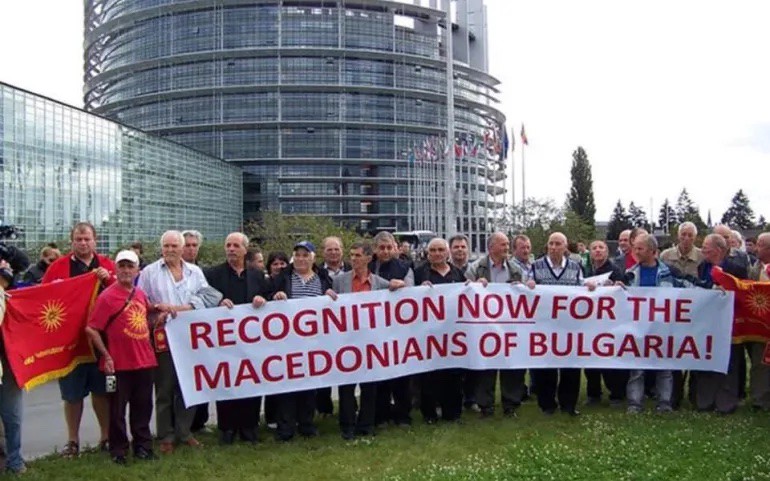
In Bulgaria, the government and much of civil society assert that there is no such thing as a distinct Macedonian identity, nor do they recognize a national Macedonian minority group. Bulgarians often consider Macedonians as ‘Western Bulgarians’ and, consequently, deny the existence of a separate Macedonian identity and language. The phrase ‘one nation in two states’ captures what is often seen as Bulgaria’s unofficial—if not at times official—policy regarding Macedonia and Macedonians.
It is estimated that over a million Macedonians reside in Bulgaria, primarily in the Pirin region of Southwestern Bulgaria. However, Macedonians in Bulgaria face significant restrictions and do not enjoy basic freedoms, including the right to assembly, freedom of speech, and freedom of religion.
MACEDONIAN MINORITY IN SERBIA
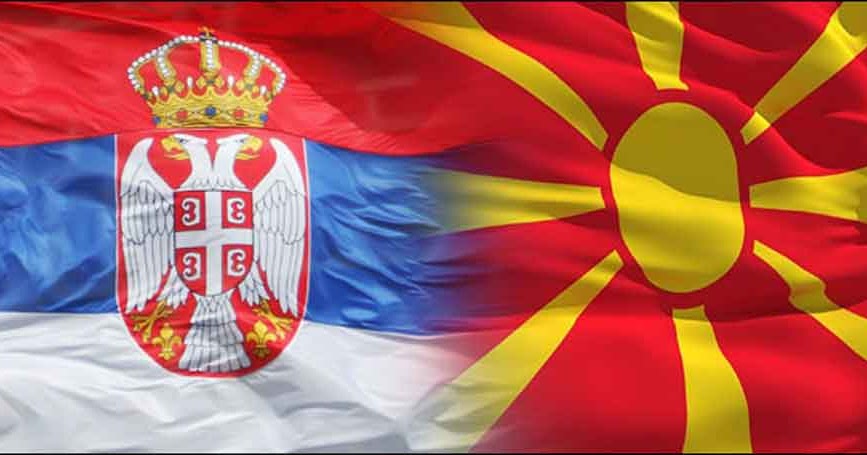
Serbia takes a comparatively more liberalized stance toward the Macedonian minority in the country. However, significant progress is still needed to ensure equal access to Macedonian language instruction within the school system.
MACEDONIAN MINORITY IN KOSOVO
Kosovo, which was established in 2008, faces challenges in building its nation-state and tends to prioritize the interests of the majority Albanian population. Approximately 45,000 Macedonians of the Muslim faith reside in Kosovo’s Gora region.